Your office carpet is silently hosting up to 200,000 bacteria per square inch and your last vacuum did almost nothing about it. In 2026, as hybrid workplaces demand higher sanitation standards than ever before, carpet shampooing has moved from a periodic nicety to a non-negotiable pillar of office hygiene strategy.
1. The hidden hygiene crisis beneath your feet
What office carpets actually harbour
The average office carpet accumulates far more than dust and stray staples. Research from the Carpet and Rug Institute reveals that carpets can trap up to 1.5 kg of soil per square metre annually. Within that compacted layer live allergens, volatile organic compounds (VOCs), dead skin cells, food residue, and a thriving microbial ecosystem. Regular foot traffic grinds these particles deeper into the carpet fibres, well beyond the reach of any surface vacuum.
200KBacteria per sq inch in untreated carpet
1.5 kg of soil trapped per m² annually
4,000×More bacteria than a toilet seat
Why vacuuming alone is insufficient
Standard vacuuming removes surface debris but leaves behind embedded contaminants, biofilm-forming bacteria, and allergen particles bonded to carpet fibres at a microscopic level. Only hot-water extraction or professional carpet shampooing can penetrate deep enough to dislodge and remove these residues entirely. Think of vacuuming as sweeping a kitchen counter — useful, but not a substitute for actually washing it.
2. Post-pandemic health standards have permanently shifted
How employee expectations changed after 2020
The post-pandemic workplace has raised the baseline for what employees consider acceptable hygiene. A 2024 survey by the International Facility Management Association (IFMA) found that 71% of office workers actively check workplace cleanliness before deciding whether to return to the office on hybrid days. Dirty, stained, or odorous carpets are one of the top three visual cues employees associate with a neglected work environment.
In 2026, visible cleanliness is a talent retention factor. Facilities that invest in regular carpet shampooing report measurably higher office attendance rates on optional in-office days.
Compliance, liability, and duty of care
Under most occupational health and safety frameworks across the UK, US, EU, and Australia, employers hold a duty of care to maintain a clean and safe physical environment. Mould spores and bacterial colonies embedded in carpets can trigger respiratory conditions and worsen asthma — liabilities that are increasingly surfacing in workplace health claims. Regular documented carpet shampooing provides a paper trail of due diligence.
3. The measurable impact on employee health and productivity
Sick days and indoor air quality
Carpets act as both a filter and a reservoir for airborne particles. When clean, they trap allergens and prevent them from recirculating. When saturated, they re-release particles with each footstep, degrading indoor air quality significantly. The US Environmental Protection Agency (EPA) estimates that indoor air can be two to five times more polluted than outdoor air — and flooring condition is a major contributing factor.
15%Reduction in sick days linked to clean flooring environments
2–5×Indoor air more polluted than outdoor (EPA)
$3,600Avg annual cost per employee of poor air quality in lost productivity
Cognitive performance and the clean-environment effect
Psychological research consistently shows that employees in clean, well-maintained workspaces report higher focus, lower stress, and greater job satisfaction. The physical condition of surroundings signals to the brain whether an environment is safe and valued. Stained or malodorous carpets subtly communicate neglect — impacting morale even among employees who would never consciously articulate it.
4. Carpet shampooing methods: choosing the right approach for your office
Hot water extraction (steam cleaning)
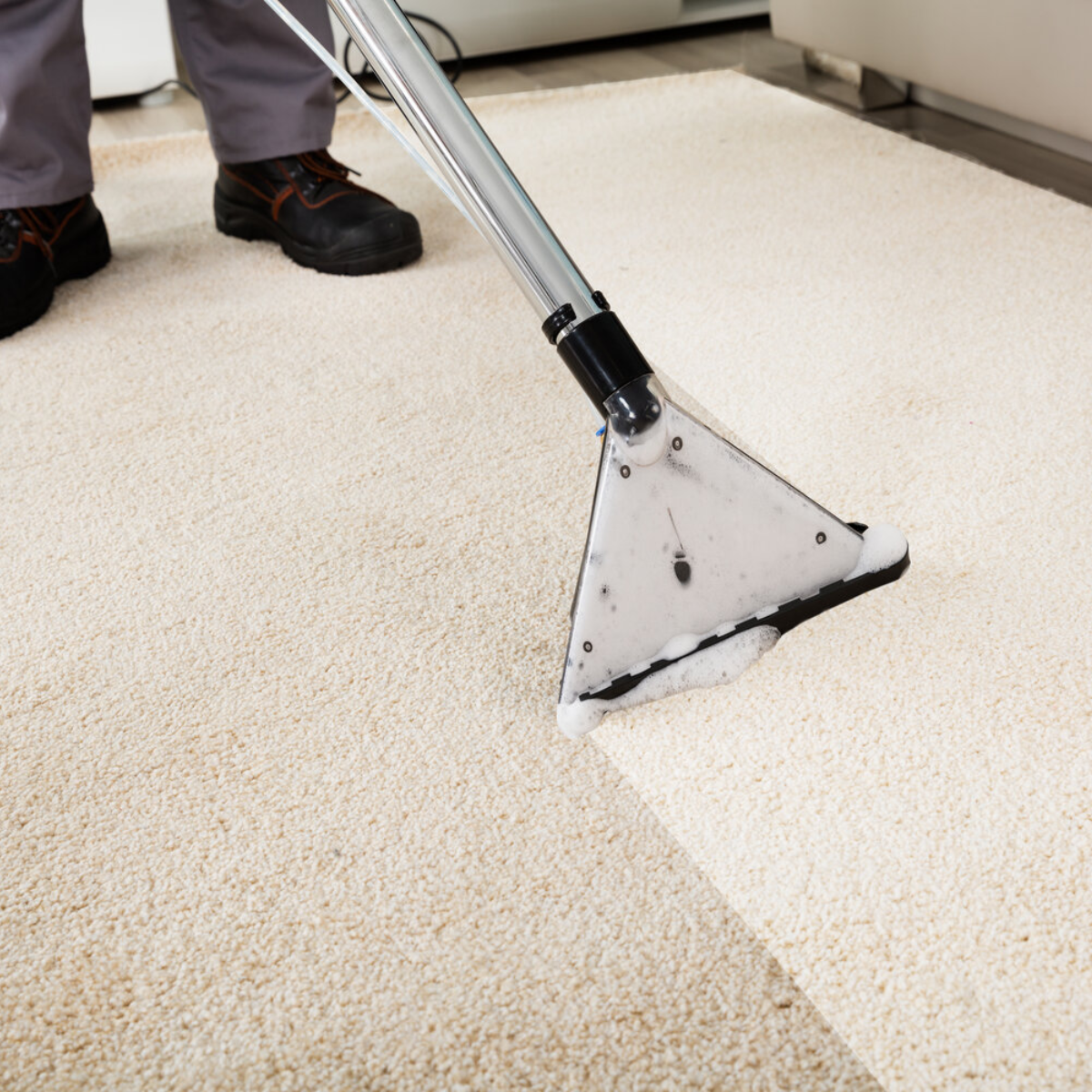
Hot water extraction remains the gold standard recommended by most carpet manufacturers and hygiene bodies. Pressurised hot water is injected deep into the carpet pile and immediately extracted along with dislodged contaminants. This method removes up to 97% of bacteria and allergens according to independent laboratory tests. It is ideal for high-traffic commercial environments and is the method most commonly certified under ISO 9001 cleaning standards.
Encapsulation and low-moisture methods
For offices that cannot afford extended drying times, encapsulation technology offers a faster alternative. Cleaning polymers crystallise around soil particles, which are then vacuumed away once dry — typically within 20 to 30 minutes. While not as deep-cleaning as hot water extraction, encapsulation is effective for routine maintenance between full shampooing cycles and works well in 24/7 operations.
Recommended shampooing frequency by office type
High-footfall zones such as reception areas, corridors, and break rooms benefit from professional carpet shampooing every 2 to 3 months. Standard office floors should be treated every 4 to 6 months at minimum. Quarterly deep-cleans are increasingly included in modern facility management SLAs as a baseline hygiene requirement, not an optional upgrade.
5. The business case: ROI of regular carpet shampooing
Extending carpet lifespan
Commercial carpet replacement costs between £15 and £45 per square metre installed. A 500 sq metre office fit-out can represent a £20,000–£40,000 capital expenditure. Regular professional shampooing removes the abrasive grit and soil that degrades carpet fibre at a microscopic level, effectively doubling the usable lifespan of commercial flooring from 5 years to 10 or more. The cleaning bill is a fraction of the replacement cost deferred.
Brand perception and client-facing spaces
For client-facing offices — law firms, consultancies, financial services, healthcare providers — carpet condition contributes directly to brand perception. A 2023 YouGov business environment survey found that 64% of clients form a lasting impression of a company’s professionalism within the first 90 seconds of entering their office. Clean, fresh carpets are a silent but powerful signal of operational rigour.
The ROI calculation is straightforward: a quarterly carpet shampooing programme at £800–£1,500 per session prevents £30,000+ in early carpet replacement and protects far greater value in employee productivity and client perception.
6. Sustainability and eco-friendly shampooing in 2026
Green-certified cleaning chemistry
Modern carpet shampooing no longer requires harsh solvents or phosphate-laden detergents. In 2026, leading commercial cleaning contractors use biodegradable, pH-neutral encapsulation polymers and plant-derived surfactants certified under Green Seal or EU Ecolabel standards. These formulations are effective against microbial contamination while producing negligible chemical runoff — an important consideration for offices pursuing ISO 14001 environmental management certification.
Water usage innovations
Next-generation low-moisture extraction equipment now uses up to 70% less water than traditional steam cleaning machines while achieving comparable bacteriological results. For offices with sustainability KPIs and annual environmental reporting obligations, this makes professional carpet shampooing compatible with — rather than in tension with — green operations goals.
7. Implementing a carpet hygiene programme: practical steps for facilities managers
Audit, schedule, and document
Begin with a zone-based audit of your office footprint, categorising areas by traffic intensity. Map out a cleaning calendar that schedules hot water extraction for high-traffic zones quarterly and standard areas bi-annually. Document every session with date, method, product used, and contractor certification — this record supports both compliance reporting and insurance requirements.
Choosing the right contractor
Look for commercial carpet shampooing contractors holding IICRC (Institute of Inspection, Cleaning and Restoration Certification) credentials, or equivalent national certification. Request evidence of public liability insurance and confirm that technicians are trained in commercial-grade equipment operation. Ask for pre- and post-treatment microbial testing on a pilot zone to establish measurable baseline and outcome data.
Communicate it to your team
Facilities management often operates invisibly. Make your carpet cleaning programme visible to employees — a brief internal communication noting that carpets have been professionally shampooed reinforces your organisation’s commitment to workplace wellbeing. This simple act has a disproportionately positive effect on how staff perceive the quality of their working environment.
Conclusion
In 2026, carpet shampooing is no longer a cosmetic concern for office managers — it is a foundational element of workplace hygiene, employee health, legal compliance, and operational cost management. The evidence is unambiguous: embedded bacteria, allergens, and VOCs in untreated commercial carpets directly harm the people who work above them and the businesses that employ them.
Facilities that treat regular professional carpet cleaning as a core part of their hygiene infrastructure will spend less on carpet replacement, lose fewer productive hours to illness, create better first impressions for clients, and demonstrate the kind of care for their workforce that the modern talent market demands.
Book Professional Carpet Cleaning Today. Contact us taday.